
How duct sealing works
Four steps, in the same order, on every project. The first and last steps are both measurements — that is what makes the middle two accountable.
- 01
Measure
We evaluate the duct system and establish existing leakage. This is the baseline everything else is compared against — before any product is applied and before any promise is made.
- 02
Prepare
We protect the HVAC equipment and temporarily block the registers so the sealing process stays inside the duct system, where it belongs, and not in your living space.
- 03
Seal
Our featured method is aerosol duct sealing. The system is pressurized and a fine sealant mist is introduced inside the ductwork, so escaping air carries the sealant to the leak openings and closes them from within — including leaks that are difficult or impossible to reach by hand. It seals the gaps rather than coating the duct interior.
- 04
Verify
We test the system again and document the measured difference, so the outcome of the work is a number you can keep — not an impression.
We don't just say your ducts are tighter. We measure the difference.
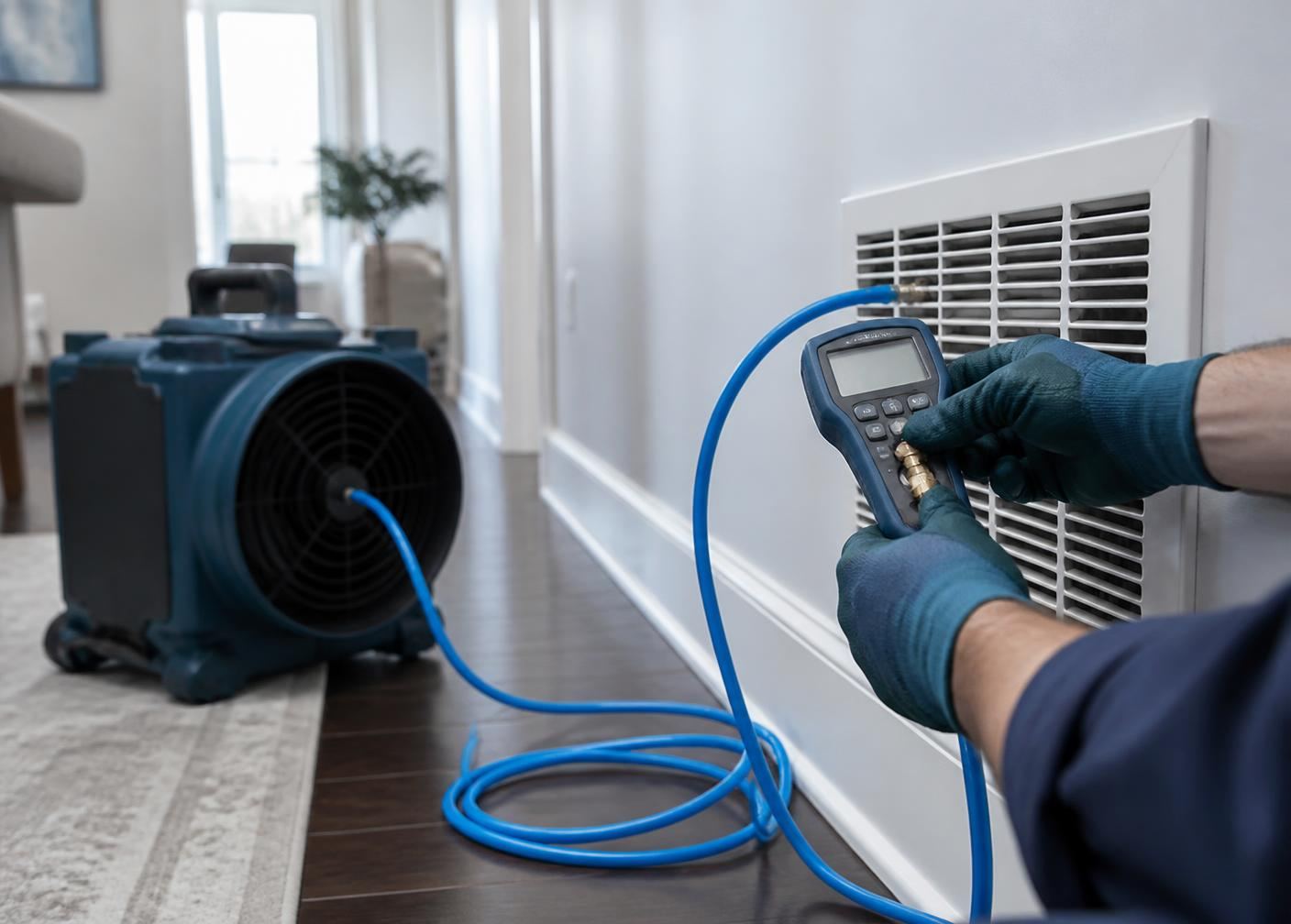
Verification
What you get at the end
- A measured duct-leakage figure from before the work.
- A measured duct-leakage figure from after the work.
- The documented difference between the two.
- An honest note on anything the sealing process could not address.
Find out what your duct system is actually doing.
Schedule a duct leakage evaluation and get measured numbers for your home — not a guess.